


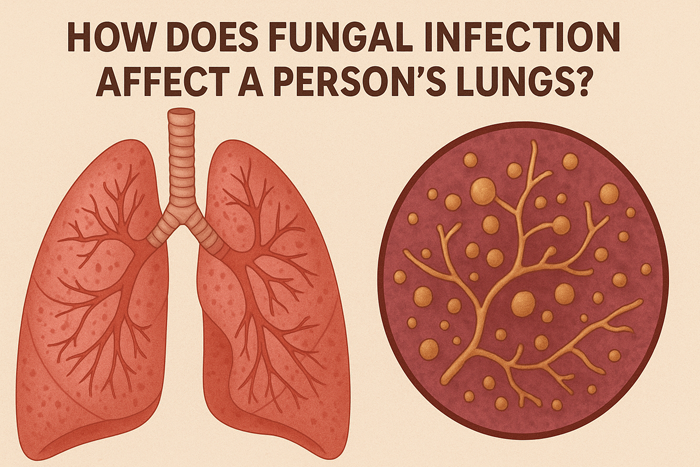
Fungal infection of the lungs can turn out to be critical, particularly in persons with weak immune systems. These infections are caused by fungi rather than bacteria or viruses.
Specifically, these fungi are found in the environment and, when inhaled, they could manifest various respiratory symptoms from mild to severe forms including fatalities.
Common Types of Fungal Infections That Attack the Lungs
Aspergillosis
Aspergillus is a fungus that is present in the environment, soil and leaf litter. It can cause:
– Allergic bronchopulmonary aspergillosis (ABPA)
– Chronic pulmonary aspergillosis
– Invasive aspergillosis – This type of aspergillosis is usually seen in immunocompromised
patients and can be serious
Mucormycosis
Mucor is also an environmental fungus, which causes one of the most critical and deadly infections of the lungs. It has been known as Black Fungus in the general community (because
of the blackish color of the fungal growth, as seen by the naked eye). The mortality rates associated with invasive mucormycosis of the lungs are very high if not treated timely.
Histoplasmosis
Histoplasma capsulatum is a fungus that infects those individuals who inhale the spores of the fungus from bird or bat droppings.
Coccidioidomycosis (Valley fever)
It is caused by Coccidioides fungus that lives in the soil located in some arid areas.
Blastomycosis and Cryptococcosis
It is infrequent; yet if present, it could be fatal and involve the lungs and other organs.
Fungal Lung Infections Symptoms
Fungal infection symptoms often resemble those of common illnesses like cold or pneumonia:
– Cough, sometimes with admixture of blood
– Pain in the chest
– Breathing difficulty
– Elevated body temperature and feeling cold
– Weight loss
The onset of symptoms may also be insidious and the person may not notice anything until the ailment progresses.
Who Is at Risk?
Everyone can be prone to fungal infections of the lung, but the following groups are more vulnerable:
– Individuals having poor host defense against infection, like patients with human immunodeficiency virus/acquired immune deficiency syndrome; patients on anticancer therapy, transplanted organ recipients
– People with chronic lung disease such as chronic obstructive pulmonary disease (COPD) or asthma
– Those taking long-term corticosteroids or immunosuppressive medications
– People with diabetes
– Individuals who are heavily exposed to sites of construction activity, agricultural practices, bird or bat droppings
Diagnosis and Treatment
Finding out the presence of a fungal infection in the lungs is done through:
– Chest X-rays or CT scans
– Sputum or bronchoalveolar lavage tests
– Blood tests for biomarkers like Galactomannan
After diagnosis, the management consists of:
– Antifungal drugs depending on the type of fungal infection (e.g. voriconazole, posaconazole, isavuconazole, itraconazole, echinocandins, amphotericin B)
– Surveillance and supportive care for the treatment of the condition over a long period
– Hospitalization in case of serious or persisting cases
It is important to consult an infectious diseases specialist for the optimal and successful management of such complicated infections.
Concerned About Lung Infections?
Do not neglect your lungs if you have been experiencing chronic airway-related symptoms, particularly after being in the vicinity of dust or construction site or bird or bat droppings.
Get the complete treatment of fungal and other nonspecific pulmonary infections at the Infectious Diseases Clinic Tathaagat in Ahmedabad.
:: Call now: +91 96646 30466
Do not wait for the disease to spread or take action for health born by your lungs.