


This is one of the most common and heartfelt questions I hear from parents in my clinic:
“Doctor, can my child catch TB from an adult at home?”
I understand the fear behind this question. When a child’s health is involved, every parent worries — and rightly so. Let me answer you clearly and honestly, the way I would, if you were sitting across from me in my consultation room.
Yes, children can catch TB from adults at home, especially when the adult has active pulmonary TB. But this does not mean that every exposed child will become sick. With timely medical care, awareness, and the right preventive steps, children can be protected very effectively.
How TB Spreads at Home – In Simple Terms
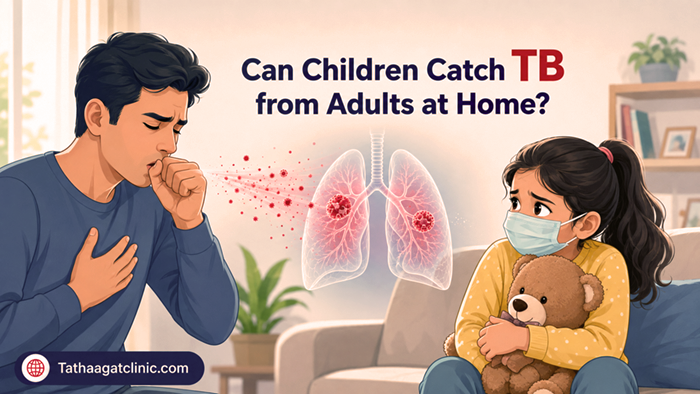
TB spreads through the air. When an adult with infectious TB coughs, sneezes, talks, or even laughs, microscopic droplets containing TB bacteria are released into the air. In homes where people live closely together, share rooms, or have limited ventilation, these bacteria can be inhaled by others — including children.
Children are usually at higher risk because:
- They spend a lot of time indoors with family members
- They may sleep in the same room as adults
- Their immune systems are still developing
This is why household exposure is something we take very seriously.
Why Children Need Extra Attention
Children do not respond to TB the same way adults do. Their immunity is not fully mature, especially in younger age groups. This means two things:
First, children are more likely to get infected after close contact.
Second, they are more vulnerable to severe forms of TB, such as TB of the brain or widespread TB in the body.
What makes it more challenging is that children often do not show classic TB symptoms. They may not have a strong cough or obvious signs. Sometimes, the only clues are poor weight gain, low energy, or prolonged fever. This is why TB in children can be missed if we are not careful.
Exposure Does Not Always Mean Disease
I want to reassure parents about one very important point:
Not every child exposed to TB becomes sick.
When a child comes in contact with TB bacteria, one of three things can happen:
- The immune system clears the bacteria completely
- The child develops latent TB infection (no symptoms, not contagious)
- The child develops active TB disease
Many children fall into the second category — latent TB. These children look perfectly healthy but carry inactive bacteria. If left untreated, latent TB can become active later in life. That is why preventive treatment is often advised, even when the child looks well.
Symptoms Parents Should Never Ignore
As a doctor, I always tell parents to trust their instincts. If something feels “not right,” it usually isn’t.
Please seek medical advice if your child has:
- A cough lasting more than two weeks
- Fever that comes and goes, especially in the evening
- Poor appetite or unexplained weight loss
- Fatigue or reduced playfulness
- Night sweats
- Swelling of glands in the neck or elsewhere
In infants, symptoms can be very subtle — irritability, poor feeding, or failure to thrive.
What I Do When an Adult at Home Has TB
When an adult is diagnosed with TB, my next concern is always the family — especially children. Household screening is essential.
I usually recommend:
- Clinical evaluation of all close contacts
- Appropriate tests based on symptoms, age and risk
- Preventive treatment for children when indicated
The good news is that once an adult starts proper TB treatment, their ability to spread the infection reduces significantly within weeks. So early diagnosis and strict treatment adherence protect the entire household.
Can TB Spread Be Prevented at Home?
Absolutely. TB transmission is preventable, even within families.
Here’s what truly helps:
- Starting TB treatment early and completing it fully
- Ensuring medications are taken regularly
- Keeping rooms well ventilated
- Allowing sunlight into living spaces
- Following cough hygiene and mask use during the infectious phase
I often reassure families that children usually do not need to be separated from parents if proper medical guidance is followed.
What About the BCG Vaccine?
Most children in India receive the BCG vaccine at birth. While it does not completely prevent TB infection, it offers strong protection against severe and life-threatening forms of TB in children. However, vaccination alone is not enough. Screening and preventive care remain crucial after exposure.
Why Specialist Care Makes a Difference
TB in children requires careful evaluation and expertise. Diagnosing TB, deciding who needs preventive therapy, and managing treatment safely are critical steps. Early involvement of an infectious diseases specialist helps prevent complications and ensures long-term health.
My Message to Parents
TB can sound frightening, especially when children are involved. But please remember this:
TB is curable. TB is preventable. And children can be protected.
The key lies in early medical attention, correct treatment, and consistent follow-up. Fear delays care — awareness saves lives.
If someone in your household has TB, or if your child has been exposed to a TB patient, do not wait for symptoms to appear. Early evaluation can make all the difference.
To book an appointment with Dr. Surabhi Madan, call 096646 30466