


When TB is diagnosed during pregnancy, the first reaction I usually see is silence — followed by fear. Many women assume that this diagnosis automatically means danger for their unborn baby. So, before we go into details, let me state this clearly, the way I say it in my clinic:
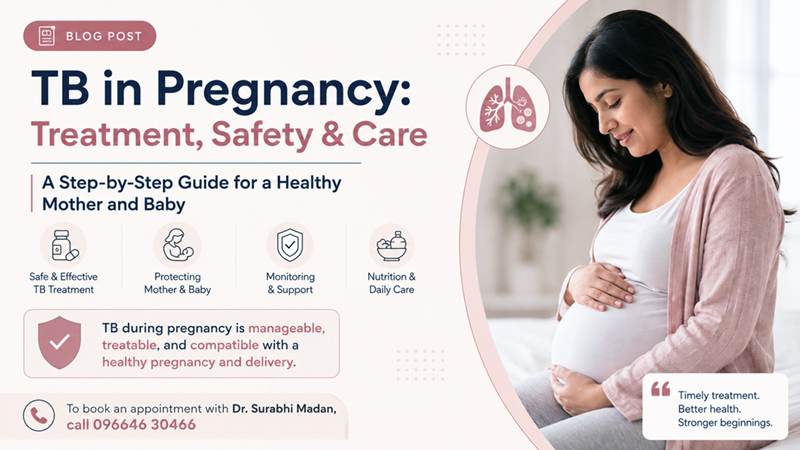
TB during pregnancy is manageable, treatable, and in most cases, compatible with a healthy pregnancy and delivery.
What matters is how it is handled.
Step One: Understanding What TB Means in Pregnancy
TB does not behave very differently just because a woman is pregnant, but pregnancy does change how we approach treatment. The infection can affect the lungs or other organs, and symptoms may overlap with pregnancy-related changes — tiredness, breathlessness, or mild fever.
Because of this overlap, TB is sometimes detected later than it should be. Once diagnosed, however, the focus shifts immediately to safe treatment, and not waiting.
TB does not automatically spread to the baby. Transmission from mother to child is rare and usually linked to untreated or advanced disease. Early care significantly reduces this risk.
Step Two: Deciding Whether Treatment Is Necessary
One of the biggest misconceptions I hear is, “Doctor, can we wait until delivery to start medicines?”
The answer is no.
Leaving TB untreated during pregnancy carries far more risk than treating it. Untreated TB can affect:
- The mother’s nutrition and oxygen levels
- Fetal growth
- Timing of delivery
So, treatment is not optional — it is protective.
Step Three: Choosing Safe TB Medicines
This is where many pregnant women worry the most.
First line TB medications are considered safe during pregnancy. These medicines have been used for decades, and their safety profiles are well established.
As a doctor, I do not prescribe blindly. I consider:
- Microbiological confirmation of the diagnosis
- Whether the TB is drug-sensitive or resistant
- The woman’s general health, and possible side effects or interactions with other medicines due to any coexisting illnesses in the pregnant female
- Any previous TB treatment history
The goal is always to treat the infection effectively while maintaining safety for the baby.
Step Four: Monitoring During Treatment
TB treatment during pregnancy is not “take medicines and forget about it.” It involves closer follow-up than usual.
During treatment, I regularly monitor:
- Symptom improvement
- Weight and nutritional status
- Medication tolerance
- Any side effects
This does not mean complications are expected — it means pregnancy deserves extra attention.
Many women are reassured once they see improvement in symptoms within the first few weeks of treatment. This is common and expected.
Step Five: Addressing Drug-Resistant TB
If TB is drug-resistant, treatment becomes more complex, but not impossible.
In such cases, decisions are individualized. Some medicines may need adjustment or careful timing. This is why treatment during pregnancy should always be supervised by a specialist, who has good expertise in managing such challenging scenarios.
Stopping treatment midway or switching medicines without advice can worsen outcomes for both mother and baby.
Step Six: Nutrition and Daily Care
Medicines alone are not enough.
Pregnant women with TB have to be extra vigilant about-
- Adequate nutrition
- Iron and vitamin support when appropriate
- Rest without complete inactivity
- Emotional reassurance
TB increases the body’s nutritional demands, and pregnancy adds another layer. Supporting the body properly improves recovery and pregnancy outcomes.
Step Seven: What Happens at Delivery?
Most women on TB treatment can have normal deliveries. TB alone is not an indication for caesarean section.
At birth:
- The baby is examined carefully
- Preventive steps are taken if required
- Follow-up plans are explained clearly
In most cases, babies are born healthy and do not develop TB.
Step Eight: Breastfeeding Concerns
Another common fear is breastfeeding.
In most situations, breastfeeding is safe while the mother is on TB treatment. The amount of medicine passing into breast milk is minimal and not harmful.
If the mother is still infectious at delivery, temporary precautions may be advised — but breastfeeding is usually encouraged once treatment has started.
Step Nine: Emotional Well-being Matters
Pregnancy with TB is emotionally exhausting. Anxiety, guilt, and fear are natural. I remind my patients that TB is an infection — not a personal failing.
Clear information, family support, and regular reassurance are just as important as medicines.
Final Message from Me
If you are pregnant and have TB, or if you suspect it, please do not delay seeking care. TB is curable, even during pregnancy. With timely treatment and medical supervision, most women go on to have safe pregnancies and healthy babies.
Fear should never guide treatment decisions — informed medical care should.
If you are pregnant and need clarity on TB diagnosis, treatment safety, or next steps, timely consultation can make all the difference.
To book an appointment with Dr. Surabhi Madan, call 096646 30466